OUR DAUGHTERS
They have never stopped dreaming.
When Briona was born, we were told she had sickle cell disease. We had hoped, the way parents hope, that the worst of it might pass her by. What we were not prepared for was how far it would reach.
What sickle cell has meant for Briona

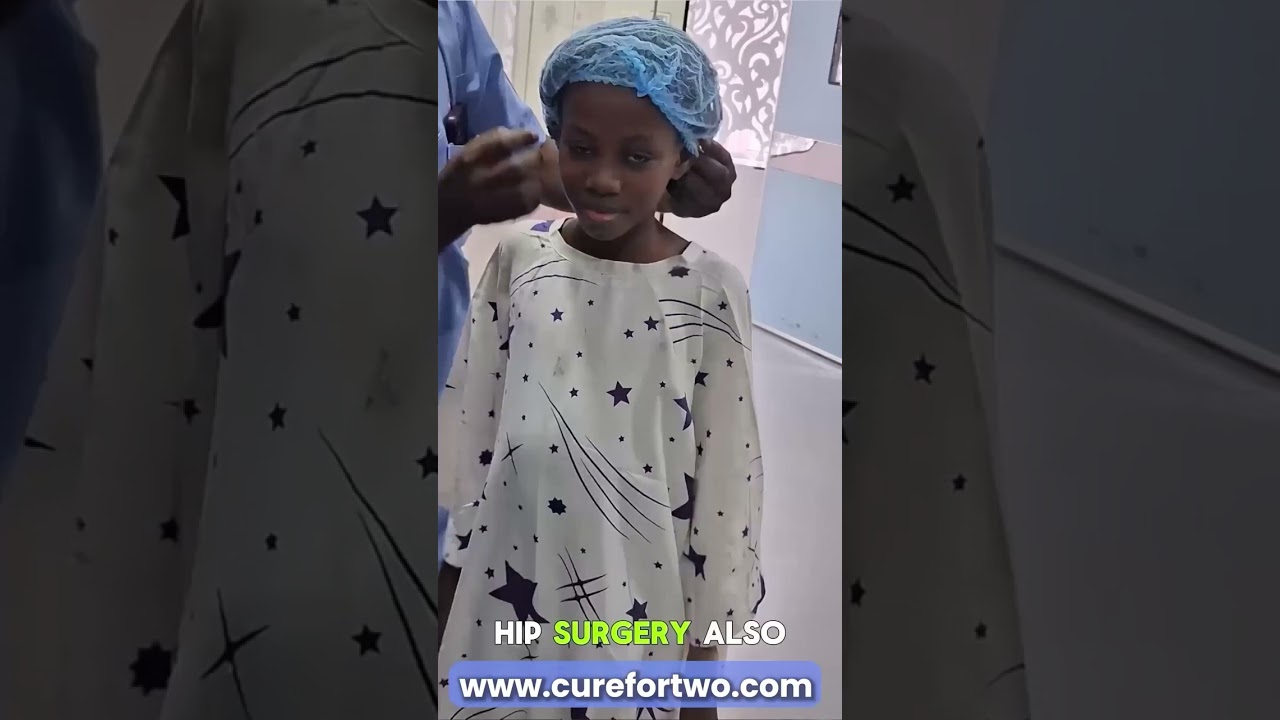
Briona, preparing for her hip replacement surgery, October 2025
- —September 2022: severe jaundice and cardiac complications from anaemia. She was eleven years old.
- —Hip pain followed. We thought it was a regular crisis. We kept waiting for it to pass.
- —Her gait changed. She stopped walking long distances. The girl who used to split to the floor with joy stopped dancing.
- —2024: diagnosed with avascular necrosis — the blood supply to both hips interrupted, the bone dying. Core decompression surgery on both hips in March 2024.
- —January 2025: pain returned with force. On admission from January 9th to January 30th. Her BECE national exams were weeks away.
- —She would not defer. We got permission from the zonal supervisor and created a makeshift clinic at the exam venue.
- —October 2025: total hip replacement of the right hip. She was fourteen. Her surgeon told us she was the youngest patient ever to have that surgery at the hospital.
What this has meant for Elena

Elena, before surgery.
- —December 2024: Elena began complaining of the same hip pain Briona had described. Because of what we had learned, we knew what to look for immediately.
- —Diagnosed with avascular necrosis at stage one — caught early. We are grateful for that.
- —Elena also has a gallbladder condition requiring surgery ahead of her bone marrow transplant.
- —October 2025: while Briona was in theatre for her hip replacement, Elena was in the same hospital having core decompression surgery. October 2025 is a month we will not forget.
December 2025, a consultant at the Federal Medical Centre in Abuja asked us: had we heard of Narayana Health in Bangalore? He introduced us to another family. The father called us that same evening — it was December 31st, 2025. His daughter had received a bone marrow transplant at Narayana. She is now studying medicine in the United States.
The joy in his voice. Moving from a father who had known years of hospitals and unpredictability, to a man who could say: my daughter is free.
For years, whenever a bone marrow transplant was mentioned, we had moved on. We had been told it cost hundreds of thousands of dollars per child. It was a cure we had trained ourselves not to think about.
The cost at Narayana Health, Mazumdar Shaw Medical Centre, Bangalore: $51,000 per child. Under the care of Dr. Sunil Bhat — Vice Chairman, Oncology Services and Director of Paediatric Haematology and Bone Marrow Transplantation.
For the first time, the cure was within reach.
“We want our daughters to have the chance to grow up without their lives being organised around pain, hospitals and the next crisis. There is now a path to that life. We cannot get them there alone.”
Kingsley & Irene Bangwell
WHY YOU CAN TRUST THIS CAMPAIGN
Asking people to help us raise this amount of money for our daughters is a big ask, and we do not take your trust lightly.
Kingsley and I know just how important integrity and trust are. We have been fortunate to build three different organisations where the core currency is trust — people trusting us with their children, their communities, their resources, and the responsibility to serve well.
We understand that when you give to Cure for Two, you are extending that same trust to us. We want you to be able to see how your gift is being stewarded.
OUR ACCOUNTABILITY
We take that trust seriously.
Independent oversight.
An independent accountability group will provide oversight of the funds raised: Dr. Chidiebube Ocheme, Physician Anaesthesiologist (Nigeria); Shruti Shibulal (India); Heidi Doose (United States); and Claudia Massei (Brazil).
A public record of giving.
Our See Givers page will publish donations received directly through our campaign bank accounts. Donations made through our online payment platform will be visible through the platform.
Updates throughout the journey.
We will share regular updates as the campaign and treatment progress, including how the funds are being used, so you can follow the journey your generosity is helping to make possible.
We know that giving is an act of trust. We intend to honour it.